Loneliness among young people: why it concerns us all
1 December 2025

Corine Dijk, Assistant Professor of Clinical Psychology, has been studying loneliness among students for years. ‘The feeling of loneliness itself is something healthy,’ Dijk explains straight away. ‘Think of it as hunger, a signal that nudges you into action. That unpleasant feeling can actually motivate a student to ask someone from their seminar for a coffee or to hang out.’
‘But when loneliness lasts too long, a vicious cycle will develop,’ she continues. ‘You start having negative thoughts about yourself (“I don’t matter”) and about others (“No one cares about me”). These feelings make it even harder to reach out.’
The three forms of loneliness
In her research, Corine Dijk distinguishes three forms of loneliness:

Social loneliness
Social loneliness is about missing a broader circle of friends or a sense of belonging. Among students, this is often linked to lower self-confidence. ‘Students who are socially lonely are often unconfident of themselves. That first step towards a social event or sending a message then feels even bigger.’
Social media amplifies this both positively and negatively. Confident young people use social media to stay in touch and quickly build a new social network. Those who are shy or insecure tend to focus more on others online rather than posting themselves. ‘You end up constantly comparing yourself to others and feeling like you don’t belong,’ Dijk explains.
Emotional loneliness
In short: missing a close, intimate bond: like the kind you might have with a partner or parent. This form is less common among young people than among people in their forties or fifties, as it's perfectly normal for young people to not have a romantic relationship yet.
‘But emotional loneliness is also present when young people describe a sense of emptiness, as though there’s a glass wall between them and their friends. If this feeling is strong, you’re likely dealing with mental health issues,’ says Dijk.
Collective loneliness
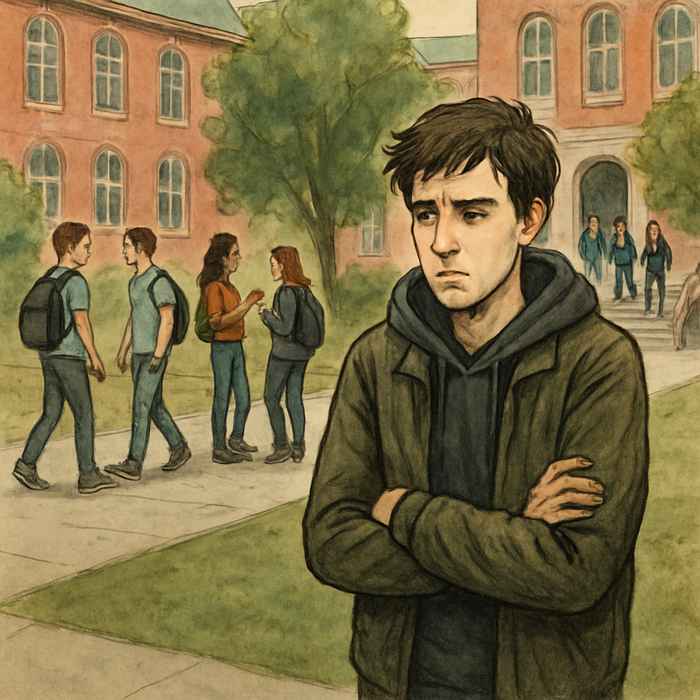
Collective loneliness is the feeling that you don’t belong to any group at all. No sense of connection in your hometown or study environment. ‘If you walk across campus thinking: this is my place, you can feel connected even when you’re on your own. But if you constantly see others belonging to something you’re not part of, you can feel deeply lonely.’
It differs by life stage
The reason loneliness plays such a big role among young people also has to do with the life phase they’re in. ‘Loneliness peaks during periods of major change,’ Dijk says. ‘Research shows that first-year and international students are especially vulnerable. Young people start university and arrive in a completely new environment. International students miss not only their friends but also their family, language and familiar surroundings.’
How hard is it to start a conversation with that quiet fellow student?Corine Dijk
The current housing shortage in Dutch cities also contributes to loneliness. Students who are forced to live at home maintain their existing friendships more easily, but struggle to build a new network. Dijk especially sees downsides for students who do manage to find a room. ‘Many of their peers don’t have housing, which makes eating together or going out much harder.’
The housing shortage affects collective loneliness as well: for some students, moving to the city is a relief because the progressive values there align better with their own. More conservative students often fit in better in the towns they grew up in.

Connecting with others
Loneliness isn’t something you must solve entirely on your own, it’s a shared responsibility, Dijk concludes. ‘I think we ask ourselves far too little: what can we all do about this? Lonely young people are expected to gather the courage to start a conversation, while you might be the confident type who finds it easy to approach others. How hard is it really to start a conversation with that quiet student next to you?’